September 22, 2026
Why Update Brand Messaging: Essential Guide for Growth


B2C commerce example with clear steps for small brands, exploring business models, real-world cases, tech trends, risks, and mistakes to avoid.

More than 90 percent of American startups fail to scale their side businesses into sustainable full-time ventures. This gap reveals how critical it is for early-stage entrepreneurs to master B2C commerce and choose the right model for growth. Understanding direct sales, subscription, marketplace, and freemium approaches gives you proven strategies for building lasting consumer relationships and reaching ambitious goals.
B2C commerce represents the critical business model where companies sell products or services directly to individual consumers through digital and physical channels. Understanding business-to-consumer dynamics reveals a complex landscape where technological innovation meets consumer behavior. At its core, B2C commerce transforms how brands interact with customers by enabling direct, personalized transactions across multiple platforms.
The research highlights several primary B2C commerce models that entrepreneurs should understand. These typically include:
These models demonstrate the versatility of B2C commerce, showing how brands can create unique value propositions that resonate with consumer preferences. B2C marketing strategies play a crucial role in determining which model works best for a specific business context.
Understanding the nuanced differences between these models helps entrepreneurs select the most appropriate approach for their specific market segment. Each model carries distinct advantages and challenges, requiring careful strategic planning and continuous adaptation to changing consumer expectations.
Here’s a comparison of the main B2C commerce models and their core strengths and challenges:
| Commerce Model | Core Strength | Major Challenge |
|---|---|---|
| Direct Sales | Full brand control | High marketing costs |
| Subscription | Predictable revenue | Churn management |
| Marketplace | Broad reach | Intense competition |
| Freemium | Easy user acquisition | Monetization complexity |
Pro tip: Conduct thorough market research to understand which B2C commerce model aligns most closely with your target audience’s purchasing behaviors and preferences.
The digital customer journey represents a complex, interconnected pathway where small brands transform consumer interactions through strategic touchpoints. Digital marketing best practices demonstrate how brands can effectively map and optimize each stage of customer engagement.
Research identifies several critical features defining the modern B2C digital customer journey:
The customer journey goes beyond transactional interactions, focusing on creating emotional connections and providing value at every touchpoint. Successful small brands understand that each interaction represents an opportunity to build trust, demonstrate expertise, and differentiate themselves from competitors.

Digital transformation has fundamentally reshaped how consumers interact with brands, demanding sophisticated, data-driven approaches that anticipate customer needs. Advanced analytics and personalization technologies enable businesses to craft highly targeted experiences that feel intuitive and responsive to individual preferences.
Pro tip: Map your entire customer journey using detailed customer personas and conduct regular user experience audits to identify and eliminate potential friction points.
Small brands worldwide are demonstrating remarkable success by leveraging innovative B2C commerce strategies that transform digital interaction. Brand storytelling examples reveal how strategic digital approaches can create profound market impact even with limited resources.
Research highlights several compelling B2C commerce success stories:
Successful B2C commerce is not just about technological implementation but about creating meaningful connections. Small brands that understand their customers’ unique needs and leverage targeted digital strategies can compete effectively against larger competitors. The key lies in developing agile, responsive approaches that prioritize customer experience and demonstrate authentic value.
Digital transformation enables small brands to punch above their weight by providing sophisticated, data-driven customer interactions. By investing in intelligent technology, personalization, and strategic digital frameworks, entrepreneurs can build scalable businesses that resonate deeply with their target audiences.
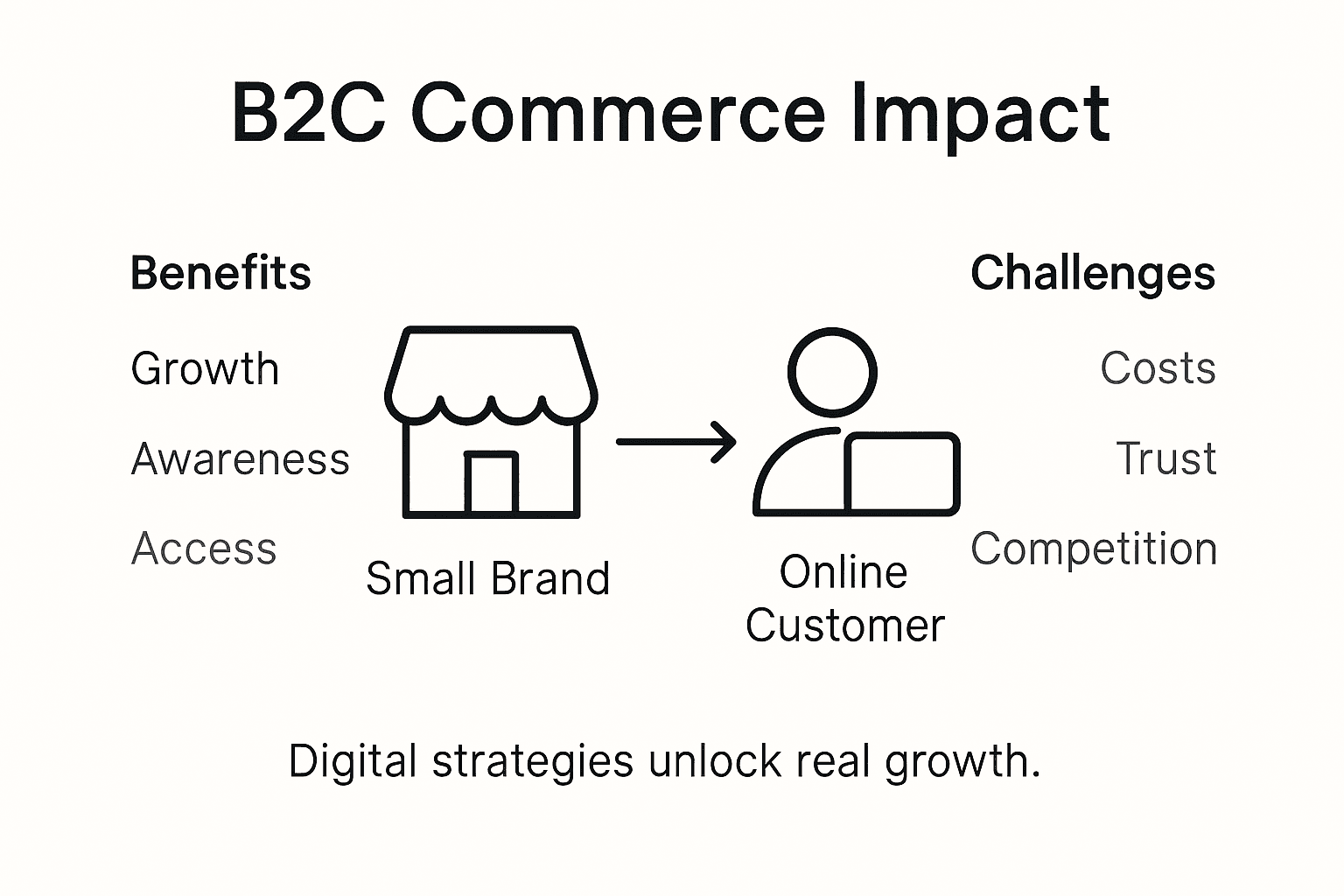
Pro tip: Develop a comprehensive digital strategy that prioritizes customer experience, leveraging data analytics to continuously refine and personalize your approach.
The technological landscape of B2C commerce is undergoing a radical transformation, with emerging trends set to redefine how businesses interact with consumers. Branding trends for founders reveal a future where technology and human-centric design converge to create more personalized, responsive consumer experiences.
Key technological trends expected to reshape B2C commerce in 2026 include:
The convergence of these technologies signals a profound shift in consumer expectations. Businesses that successfully integrate these innovations will not just sell products but create comprehensive, engaging digital ecosystems that adapt to individual consumer preferences in real time.
Gen Z and emerging consumer generations are driving these technological transformations, demanding more than transactional interactions. They seek brands that demonstrate technological sophistication, environmental consciousness, and genuine commitment to personalized, meaningful experiences.
Below is a summary of key technology trends for B2C by 2026 alongside their potential business impact:
| Trend | Business Impact | Competitive Advantage |
|---|---|---|
| Artificial Intelligence | Higher conversion rates | Personalized recommendations |
| Augmented Reality | Enhanced shopping experience | Immersive brand engagement |
| Social Commerce | Streamlined buying process | Access to younger demographics |
| Mobile-First Design | Increased purchase rates | Optimized for convenience |
| Sustainability Tech | Improved brand reputation | Appeal to eco-conscious buyers |
Pro tip: Invest in flexible, modular technological infrastructure that can rapidly integrate emerging AI, AR, and personalization technologies to stay ahead of consumer expectations.
Navigating the complex landscape of B2C commerce requires startups to understand the multifaceted risks and potential pitfalls that can derail their business journey. Brand strategy for startups becomes crucial in mitigating these challenges and building a resilient business model.
Primary risks for B2C startup entrepreneurs include:
Financial risks represent a significant hurdle for emerging B2C businesses. Startups must carefully balance investment in technology, marketing, and security while maintaining lean operational structures. The cost of customer acquisition, maintaining digital platforms, and implementing robust security measures can quickly escalate, creating substantial financial pressure for early-stage ventures.
Successful startups recognize that risk management is not about elimination but strategic mitigation. This involves developing flexible business models, investing in scalable technologies, and maintaining a deep understanding of target consumer behaviors. Building a comprehensive risk assessment framework allows entrepreneurs to anticipate potential challenges and develop proactive strategies to address them before they become critical problems.
Pro tip: Develop a comprehensive risk management strategy that includes regular security audits, diversified revenue streams, and continuous market research to stay ahead of potential business challenges.
Many small brands struggle to turn innovative B2C commerce models into lasting growth because of scattered marketing efforts and unclear brand messaging. This article highlights the challenges around building trust, managing churn, and creating seamless digital customer journeys that truly connect. If you find yourself juggling multiple marketing tactics without aligned strategy or if your customer acquisition costs feel overwhelming, you are not alone. Concepts like the Direct Sales Model or Subscription Model are only effective when supported by a cohesive plan that resonates with your audience and creates measurable impact.

Reasonate Studio specializes in guiding entrepreneurs and small businesses through these exact challenges by applying The Aligned Impact Model™. Our holistic approach unpacks your brand’s core values and audience psychology before building clear visibility and execution steps tailored for your unique market. Whether you want to refine brand storytelling, optimize digital customer journeys, or adopt sustainable growth frameworks, our strategies help you avoid costly missteps and build confident marketing foundations. Start scaling your business with clarity and systemized strategy today by visiting Reasonate Studio. Explore how thoughtful brand development can transform transactional interactions into lasting customer relationships at brand storytelling examples and learn marketing strategies designed for authentic growth at b2c marketing strategies.
Take the first step now to turn your side hustle into a full-time business with strategy that delivers real impact.
The most common B2C commerce models for small brands include the Direct Sales Model, Subscription Model, Marketplace Model, and Freemium Model. Each offers distinct advantages and challenges that can align with different business strategies.
Small brands can enhance the digital customer journey by mapping out customer personas, optimizing each interaction stage, and employing advanced analytics to anticipate customer needs. Focusing on emotional connections and personalized experiences can significantly improve customer engagement.
Primary risks for startups in B2C commerce include regulatory compliance, transaction security, establishing consumer trust, high technology investment costs, and navigating market volatility. Effective risk management strategies are essential for mitigating these challenges.
Technology is reshaping B2C commerce through trends like artificial intelligence for personalized recommendations, augmented reality for immersive shopping, social commerce for streamlined purchasing, and mobile-first designs for convenience. These innovations can significantly enhance consumer experiences and business growth.