
August 8, 2026
Understanding B2C Business to Consumer Dynamics

Branding checklist for founders: comprehensive guide to brand foundations, messaging, visual identity, differentiation, and mistakes to avoid.

Most american startups underestimate how much strategy goes into branding, not just design. Building a brand that sticks requires more than a good logo; it demands a clear system that guides every decision. A clear branding checklist transforms scattered ideas into a focused, authentic presence. With more than 80 percent of consumers admitting they choose brands they trust, getting strategic from the start helps founders shape loyalty and set their business apart.
Branding isn’t just about creating a pretty logo or selecting trendy colors. For founders, it’s a strategic roadmap that transforms your business vision into a compelling narrative that attracts your ideal customers. A comprehensive branding checklist serves as your blueprint, helping you systematically build a brand that resonates authentically and strategically.
At its core, a founder’s branding checklist breaks down the complex process of brand development into actionable steps. These steps go beyond visual design, diving deep into understanding your unique positioning, target audience psychology, and communication strategy. Founder-led branding requires a nuanced approach that leverages your personal story and professional expertise as key differentiators.
The most effective branding checklists typically include several critical components that help founders establish a cohesive and powerful brand identity:
Brand Foundation
Audience Understanding
Visual Identity
Messaging Framework
Building a strategic brand isn’t about perfection—it’s about consistent, intentional communication that builds trust and recognition. Your branding checklist should be a living document that evolves with your business, helping you communicate your unique value proposition clearly and confidently.
Building a strong brand requires more than surface-level design elements. The essential foundations form the core infrastructure of your brand’s identity, creating a strategic framework that guides all future business communications and customer interactions. These foundations act as your brand’s internal compass, ensuring consistent and authentic representation across every touchpoint.

Foundational brand elements are essentially your business’s DNA—they define who you are, what you stand for, and how you differentiate yourself in a competitive marketplace. Brand identity development goes beyond aesthetics, diving deep into the core characteristics that make your business unique. These elements include your mission statement, core values, unique value proposition, and the emotional narrative that connects with your target audience.
The key essential brand foundations every founder must establish include:
Purpose and Vision
Values and Principles
Target Audience Understanding
Unique Value Proposition
Your brand foundations are not static documents but living strategies that evolve with your business. They provide a consistent framework that helps founders make strategic decisions, communicate effectively, and build genuine connections with their target audience. Treat these foundations as your roadmap—flexible yet fundamental—guiding your brand’s growth and storytelling.
Messaging and market positioning are the strategic heartbeat of your brand, transforming your business from a mere service provider to a compelling narrative that resonates deeply with your target audience. These elements are not just marketing tactics—they’re the critical bridge that connects your unique value proposition to the specific needs and desires of potential customers.
Brand messaging strategies go far beyond catchy slogans or generic statements. They require a nuanced understanding of your audience’s psychological triggers, pain points, and aspirational goals. The most effective positioning creates an emotional connection that makes customers feel understood, valued, and compelled to choose your brand over competitors.
To craft powerful messaging and strategic market positioning, founders should focus on these key components:
Audience Psychological Mapping
Competitive Differentiation
Messaging Architecture
Emotional Value Proposition
Successful market positioning is about creating a distinctive space in your customers’ minds—one that feels authentic, compelling, and uniquely yours. By thoughtfully crafting your messaging, you transform your brand from a transactional service into a meaningful relationship that customers actively choose and enthusiastically recommend.
Visual brand identity is more than just selecting attractive colors or designing a trendy logo. It’s a strategic visual language that communicates your brand’s personality, values, and unique positioning at a glance. Every visual element serves as a powerful communication tool, transforming abstract business concepts into tangible, memorable experiences that resonate with your target audience.
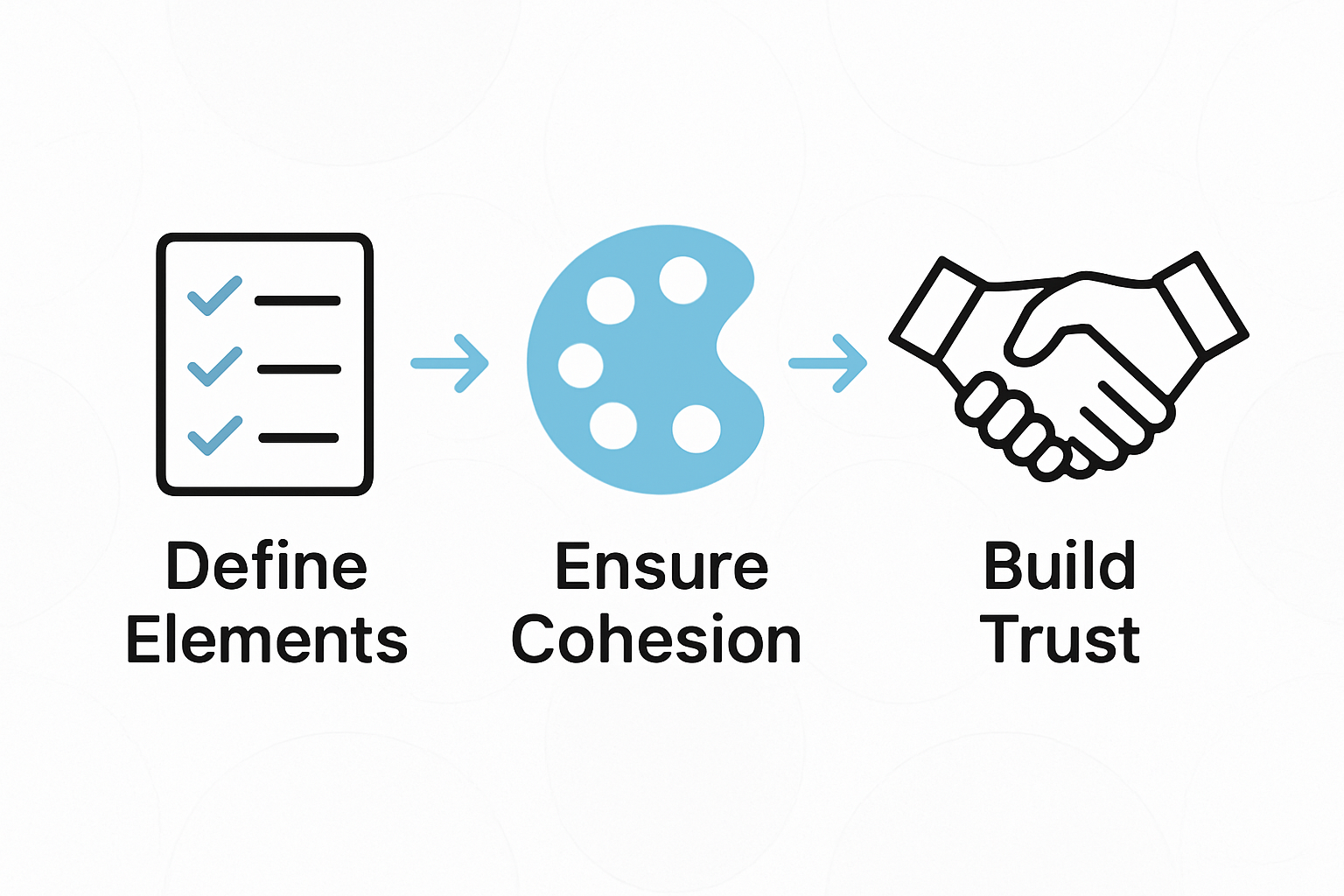
Brand identity elements create a comprehensive visual ecosystem that extends far beyond basic design choices. These elements work together to tell a cohesive story, ensuring that every interaction—whether a social media post, business card, or website—feels intentionally crafted and unmistakably yours. The goal is to build visual recognition that triggers instant emotional connection and distinguishes your brand in a crowded marketplace.
To build a truly cohesive visual brand identity, founders should focus on these critical components:
Color Psychology
Typography and Font Selection
Visual Brand Language
Visual Storytelling
A cohesive visual brand identity acts as your business’s visual signature—a powerful, recognizable system that communicates who you are without saying a word. By thoughtfully integrating design elements, you transform visual communication from a passive experience into an active invitation for connection and engagement.
The Aligned Impact Model™ represents a strategic framework that transforms traditional branding approaches from disconnected tactics to a holistic, intentional system. It’s not just another marketing methodology—it’s a comprehensive approach that connects every aspect of your brand strategy, ensuring that your business moves forward with clarity, purpose, and measurable outcomes.
Brand strategy workflow within the Aligned Impact Model™ is designed to eliminate the common pitfalls of fragmented marketing efforts. By creating a structured yet flexible pathway, founders can systematically develop a brand that is not only visually compelling but strategically precise, bridging the gap between creative expression and business performance.
To effectively align with the Aligned Impact Model™, founders should focus on these key integration principles:
Strategic Foundation
Audience Connection
Operational Integration
Performance Measurement
The Aligned Impact Model™ transforms branding from a static exercise into a dynamic, living strategy. It empowers founders to build brands that are not just aesthetically pleasing, but strategically engineered to create meaningful connections, drive business growth, and adapt seamlessly to evolving market dynamics.
Branding missteps can derail even the most promising business ventures, transforming potential success into missed opportunities. Founders often unknowingly sabotage their brand’s potential by falling into predictable traps that compromise their market positioning, credibility, and customer perception. Understanding these common pitfalls is the first step toward building a resilient, authentic brand that genuinely connects with your target audience.
Branding mistakes frequently emerge from a lack of strategic clarity and inconsistent communication. Many founders mistakenly believe that branding is a one-time effort or purely aesthetic exercise, when in reality it requires continuous refinement, strategic alignment, and a deep understanding of audience psychology.
The most critical branding pitfalls founders should proactively avoid include:
Inconsistent Brand Messaging
Neglecting Audience Research
Inauthentic Positioning
Undervaluing Visual Consistency
Successful branding is about building trust through predictability and authenticity. By recognizing and avoiding these common pitfalls, founders can create a brand that not only stands out but genuinely resonates with their ideal customers, transforming potential obstacles into powerful opportunities for meaningful connection.
Founders face the challenge of transforming complex branding steps into a clear, authentic identity that truly connects with their audience. This article highlights the importance of a strategic branding checklist and avoiding common pitfalls like inconsistent messaging or inauthentic positioning. If you want to go beyond surface-level design and craft a brand foundation that drives sustainable growth while capturing your unique story, it is critical to align your efforts with a proven framework like The Aligned Impact Model™.
Ready to stop guessing and start building a brand that resonates emotionally and works strategically? Explore how Reasonate Studio guides founders through a step-by-step process that uncovers core values, crafts compelling messaging, and designs cohesive visual identities. Learn more about our approach to founder-led branding and brand identity development. Visit our website today to take the first step toward a brand built on clarity, strategy, and intentional design.
A branding checklist for founders is a strategic roadmap that breaks down the branding process into actionable steps, helping founders build a cohesive and powerful brand identity that resonates with their target audience.
Brand foundations, including core values, mission statements, and unique value propositions, are vital because they create a strategic framework that guides all future business communications and ensures consistent and authentic representation across every touchpoint.
To craft effective messaging and market positioning, founders should focus on understanding their audience’s psychological triggers, creating a competitive differentiation strategy, and developing a consistent messaging architecture that relates directly to the needs and desires of their target market.
Common branding pitfalls include inconsistent brand messaging, neglecting audience research, inauthentic positioning, and undervaluing visual consistency. Avoiding these pitfalls helps build trust and ensures a more effective connection with customers.