September 22, 2026
Why Update Brand Messaging: Essential Guide for Growth


Learn how to increase brand recognition through stronger positioning, consistent messaging, focused visibility, and practical performance measures.

Nearly 90 percent of american businesses believe a clear brand identity gives them a competitive edge. In a crowded market, standing out is no simple feat and consistent recognition does not happen by chance. Whether you run a startup or a growing enterprise, understanding how to make your brand truly memorable can set you apart from the competition. This guide breaks down the essential steps to help you clarify, express, and grow your american brand with purpose.
Building brand recognition starts with understanding your core identity. This crucial first step involves defining the fundamental elements that will make your brand memorable and distinct in a crowded marketplace.
To clarify your brand foundations, begin by asking yourself profound questions about your business purpose. What core values drive your work? What unique perspective or solution do you offer that sets you apart from competitors? Consider David Aaker’s insights on brand identity - he emphasizes that a strong brand emerges from a clear understanding of your mission and values. Learn more about brand clarity in our comprehensive guide.
Start by documenting three key elements: your brand values, your target audience’s core needs, and the specific problem you solve. Think beyond surface level descriptions. Your brand foundations are not just about what you do, but why you do it. For service based businesses, this might mean articulating how you transform client experiences. For product entrepreneurs, this could involve explaining the deeper impact of your solution.
Warning: Many entrepreneurs skip this foundational work, jumping straight into tactics. Resist that temptation. Your brand strategy is the compass that will guide every marketing decision moving forward. Without clear foundations, your brand will feel scattered and inconsistent.
By investing time in clarifying these core elements, you create a strategic framework that will make future brand recognition efforts more focused and effective. Your next step will involve translating these foundations into a compelling brand narrative that resonates with your ideal customers.
Creating a cohesive brand experience requires strategic alignment across all your communication channels. This step focuses on developing a unified visual and messaging approach that reinforces your brand identity and builds instant recognition.
Start by creating a comprehensive brand style guide that documents every critical visual and messaging element. According to Canva’s research, this should include consistent use of logos, color palettes, typography, and graphic styles across all platforms. Explore our detailed guide on brand consistency to understand how these elements work together to create a memorable brand presence.
Your messaging should maintain a consistent tone and voice that reflects your brand foundations.
 This means developing a language framework that remains true across social media, website content, email communications, and marketing materials. Pay attention to word choice, sentence structure, and the emotional resonance of your language. Academic research from ArXiv highlights that consistent messaging builds significant customer trust and helps establish your brand as reliable and professional.
Warning: Inconsistency kills brand recognition. Avoid the temptation to change your visual style or messaging approach frequently. Your audience needs repetition and familiarity to develop a strong connection with your brand.
Think of your brand consistency like a signature. Just as your personal signature remains recognizable regardless of where you write it, your brand should feel instantly familiar no matter where customers encounter it. Your next step will involve implementing this consistent approach across all your marketing channels and customer touchpoints.
Increasing brand recognition requires a strategic approach to visibility that goes beyond simply being present on multiple platforms. This step focuses on intentionally positioning your brand where your ideal customers are most likely to engage and remember you.
Begin by identifying the key channels most relevant to your target audience. Recent research from ArXiv suggests leveraging visual and linguistic representations to create compelling ad creative design that captures attention. Learn more about effective social media marketing strategies that can help you strategically expand your brand presence.
Your visibility strategy should prioritize quality over quantity. Instead of spreading yourself thin across every possible platform, focus on mastering 2-3 channels where your ideal customers spend their time. Consider the unique strengths of each platform. For instance, Instagram might be perfect for visual brands, while LinkedIn could be ideal for professional service providers. Academic research highlights that strategic logo placement and design play a critical role in enhancing brand recognition.
Warning: Avoid the common mistake of posting inconsistent or low quality content just to maintain a presence. Each piece of content should reflect your brand foundations and provide genuine value to your audience.
Think of your channel strategy like a targeted conversation.
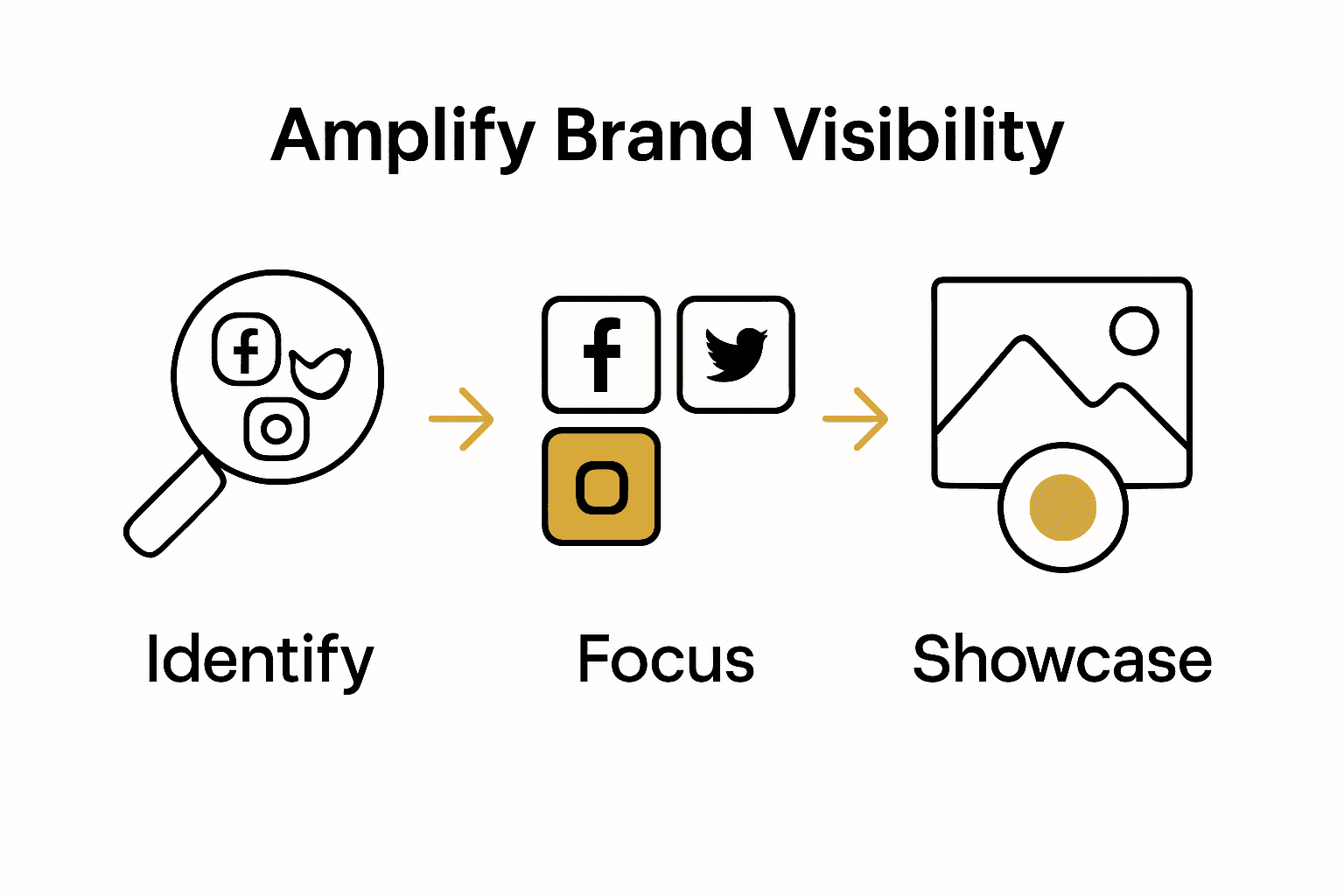 You want to be present where your ideal customers are listening and speaking in a way that feels authentic and engaging. Your next step will involve developing a content strategy that turns these visibility efforts into meaningful connections with your audience.
Building brand recognition extends far beyond individual marketing efforts. This step focuses on creating meaningful connections that amplify your brand through strategic partnerships and community engagement.
Start by identifying potential partners who share your target audience and brand values. Learn more about strategic branding advantages to understand how collaborative relationships can significantly boost your brand visibility. Drawing from Keith Dinnie’s research on place branding, strategic partnerships are not just about transactional exchanges but about creating mutually beneficial relationships that enhance brand recognition.
Consider different partnership models that align with your brand goals. This could include collaborative content creation, cross promotional opportunities, joint webinars, or even co occurrence in industry events. Look for partners who complement your brand rather than direct competitors. The goal is to create synergistic relationships that expand your reach and credibility. Research on brand implementation suggests that consistent representation across these partnerships is crucial for maintaining your brand identity.
Warning: Avoid partnerships that feel forced or misaligned with your core brand values. Every collaboration should feel authentic and provide genuine value to your audience.
Think of building partnerships like creating a professional ecosystem where your brand can grow and thrive. Your next step will involve nurturing these relationships and developing a collaborative strategy that expands your brand recognition organically.
Measuring brand recognition is not about vanity metrics but understanding how effectively your brand resonates with your target audience. This step involves developing a strategic approach to tracking your brand’s impact and making data informed adjustments.
According to research published in the Journal of Business Strategy, tracking brand recognition requires a multifaceted approach. Learn strategies for refining your brand approach that go beyond surface level measurements. Start by establishing key performance indicators that align with your specific business goals. These might include metrics like brand recall, social media engagement, website traffic from branded search terms, or direct mentions in industry conversations.
Explore both quantitative and qualitative measurement techniques. Quantitative methods might involve surveys, tracking brand mention volume, or analyzing conversion rates. Qualitative approaches could include customer interviews, sentiment analysis, and reviewing unsolicited customer feedback. The journal Visual Communication suggests paying special attention to how visual elements contribute to brand recognition. This means examining not just numbers but the emotional and perceptual responses your brand generates.
Warning: Avoid the trap of changing your entire strategy based on short term data. Look for consistent trends and patterns before making significant adjustments.
Think of measuring brand recognition as an ongoing conversation with your audience. Your metrics are not just numbers they are insights into how your brand is perceived and experienced. Your next step will involve using these insights to make incremental improvements that keep your brand strategy dynamic and responsive.
Many entrepreneurs struggle to increase brand recognition because they lack a clear foundation and consistent strategy as highlighted in the article “How to Increase Brand Recognition With Proven Strategies”. You may feel overwhelmed by the need to define your brand values, craft unified messaging, and select the right channels without wasting time or budget. It can be frustrating to navigate these steps alone while trying to build a lasting connection with your audience.
Reasonate Studio specializes in exactly these challenges. Our proprietary Aligned Impact Model™ helps you uncover deep brand foundations, develop consistent messaging, and amplify your visibility with intentional design and strategy. Whether you want to scale your side hustle or elevate an existing business, our approach blends clarity, creativity, and operational discipline to create sustainable growth.
Stop guessing and start building a brand that truly resonates. Visit Reasonate Studio to explore how our strategic branding solutions connect with the proven steps outlined in this article. Learn more about how we clarify your brand identity, ensure consistent messaging, and amplify your presence by visiting our comprehensive branding guide and see how you can implement consistency in branding across platforms with our brand consistency resource. Take the next step in your brand recognition journey with a partner who understands your challenges and is ready to help you make every marketing decision with confidence.
To clarify your brand foundations, start by identifying your core values, target audience needs, and the specific problem your brand solves. Document these elements to create a strategic framework that will guide your future branding efforts. Aim to complete this in a week for a clear vision moving forward.
A brand style guide should include your logo usage, color palette, typography, and messaging tone. Create this guide to ensure consistency across all your marketing channels, ideally within 30 days, helping boost brand recognition and customer trust.
Identify key channels by researching where your target audience spends their time online. Focus on mastering 2-3 relevant platforms, such as social media or industry-specific websites, to enhance your brand’s visibility and engagement. Set a goal to finalize your channel strategy within two weeks.
Engage in partnerships that align with your brand values and share your target audience, such as co-hosting events or creating collaborative content. Identify potential partners and reach out to them within the next month to build meaningful relationships that can expand your reach.
Measure brand recognition through a mix of quantitative metrics like social media engagement and qualitative feedback from customer interviews. Set specific key performance indicators for tracking, and review your findings every quarter to make informed adjustments to your strategy.
Refine your brand approach by regularly evaluating your brand metrics and identifying trends over time. Commit to making incremental improvements based on these insights, ideally reviewing your strategy every 3-6 months to keep your brand dynamic and responsive.