
August 8, 2026
Understanding B2C Business to Consumer Dynamics

Channel marketing strategies help small businesses scale by leveraging various digital and traditional channels, optimizing costs, and boosting brand impact.

Choosing how to get your services in front of the right people can feel confusing when every platform, partner, and pathway seems like a possibility. For early-stage entrepreneurs, understanding the real impact of your distribution choices is what separates scattered efforts from a scalable brand. This guide breaks down the essentials of channel marketing strategies so you can confidently select the right networks, build strong partnerships, and attract clients across global markets.
Channel marketing strategies represent a structured approach for businesses to distribute products and services through multiple interconnected pathways. At its core, channel marketing focuses on selecting, managing, and optimizing different communication and distribution networks that connect products with potential customers.
Understanding channel marketing requires examining how businesses strategically select intermediaries like distributors, retailers, wholesalers, agents, and online platforms to reach target audiences. These intermediaries play a critical role in bridging manufacturers or service providers with end consumers. By carefully analyzing marketing strategy fundamentals, entrepreneurs can design channel strategies that maximize reach while minimizing operational complexity.
The key components of effective channel marketing strategies include:
Effective channel marketing goes beyond simple product placement. It requires understanding customer behaviors, market dynamics, and the unique value proposition each channel partner brings to the ecosystem. Successful strategies align channel selection with broader business objectives, ensuring seamless product availability and consistent brand messaging across different touchpoints.
Pro tip: Regularly audit and evaluate your channel marketing strategy to ensure each distribution pathway remains aligned with your evolving business goals and market conditions.
Channel marketing encompasses diverse pathways that businesses can leverage to connect with potential customers. Direct channels represent the most straightforward approach, where manufacturers or service providers sell products directly to end consumers without intermediaries. These channels include company websites, direct sales teams, and proprietary retail locations where businesses maintain complete control over the customer experience.
Indirect channels introduce additional intermediaries like distributors, wholesalers, retailers, and digital platforms. Understanding different marketing strategy approaches helps entrepreneurs select the most appropriate channel mix. These channels can be categorized into several primary types:
Multichannel marketing strategies allow businesses to diversify their reach by simultaneously utilizing multiple distribution pathways. This approach enables companies to target different customer segments, reduce dependency on single channels, and create more resilient marketing ecosystems. By carefully integrating digital and traditional channels, businesses can create comprehensive communication networks that maximize audience engagement and potential conversion opportunities.

Here’s a summary of common marketing channel types and their strategic advantages:
| Channel Type | Example Use Case | Strategic Advantage |
|---|---|---|
| Direct-to-Consumer | Brand-owned webstore | Full control of customer journey |
| Retail Channel | Local retail partners | Wider physical market presence |
| Wholesale Channel | Bulk supply to chains | High volume, lower margin sales |
| Digital Channel | E-commerce marketplaces | Scalable, data-rich targeting |
| Agent/Broker Channel | Third-party facilitators | Access to niche markets |
Pro tip: Continuously analyze the performance of each marketing channel and be prepared to reallocate resources based on specific channel effectiveness and changing market dynamics.
Channel marketing serves as a powerful growth engine for businesses by creating strategic pathways that expand market reach and optimize customer acquisition. By diversifying distribution networks, companies can tap into multiple revenue streams and reduce dependence on single market segments. Implementing sustainable marketing strategies enables entrepreneurs to build resilient growth frameworks that adapt to changing market dynamics.
The growth potential of channel marketing emerges through several key mechanisms:
Data-driven channel optimization transforms marketing from a cost center to a strategic growth mechanism. Modern businesses leverage advanced analytics to understand channel performance, identifying which pathways deliver the most efficient customer acquisition and highest return on investment. By continuously monitoring and adjusting channel strategies, companies can create dynamic marketing ecosystems that respond quickly to market shifts and emerging opportunities.

Successful channel marketing drives growth by creating interconnected communication networks that maximize audience engagement. This approach allows businesses to develop personalized customer experiences across multiple touchpoints, building trust and increasing conversion potential. The key is maintaining consistent messaging while tailoring delivery methods to specific audience preferences and behaviors.
Pro tip: Regularly conduct performance audits of your marketing channels and be prepared to reallocate resources based on measurable outcomes and emerging market trends.
Building an effective channel mix requires strategic alignment between business objectives, target audience characteristics, and distribution capabilities. Channel selection is not a one-size-fits-all approach but a nuanced process of matching communication pathways to specific market segments. Creating a robust marketing strategy template helps entrepreneurs systematically evaluate and optimize their channel combinations.
The key elements of an effective channel mix include:
Successful channel mix design demands continuous analysis and adaptation. Entrepreneurs must develop dynamic strategies that balance traditional and digital channels, creating integrated communication networks that provide seamless customer experiences. This approach requires understanding each channel’s unique strengths, audience engagement potential, and performance metrics.
Technological advancements and changing consumer behaviors necessitate a flexible, data-driven approach to channel management. By leveraging analytics and consumer insights, businesses can create responsive channel strategies that evolve with market trends. The most effective channel mixes are those that can quickly pivot, combining digital and physical touchpoints to create comprehensive, personalized customer journeys.
Pro tip: Conduct regular channel performance audits and be willing to experiment with emerging platforms that align with your target audience’s evolving communication preferences.
Channel selection represents a critical strategic decision that can make or break marketing effectiveness. Entrepreneurs often fall into common traps by selecting channels based on assumptions rather than data-driven insights. Developing a comprehensive advertising campaign strategy helps businesses navigate the complex landscape of channel selection with greater precision and strategic clarity.
Common pitfalls in channel selection include:
Successful channel navigation requires a holistic approach that balances quantitative metrics with qualitative understanding. Businesses must continuously evaluate channel performance, customer engagement levels, and alignment with overall marketing objectives. This means developing flexible strategies that can pivot quickly in response to changing market dynamics and emerging communication technologies.
The table below highlights common pitfalls in channel selection with recommended solutions:
| Pitfall | Strategic Solution |
|---|---|
| Relying on one channel | Diversify distribution pathways |
| Ignoring performance data | Monitor and analyze metrics |
| Overlooking cross-channel integration | Bridge offline and online efforts |
| Resisting tech adoption | Invest in modern sales platforms |
| Underestimating needed resources | Assess and allocate properly |
The most sophisticated channel strategies transcend simple platform selection. They involve creating seamless, integrated experiences that allow customers to move effortlessly between different communication touchpoints. Entrepreneurs should focus on understanding the unique characteristics of each channel, including audience behavior, content consumption patterns, and conversion potential. By maintaining a comprehensive, adaptive approach, businesses can develop channel strategies that are both resilient and responsive to evolving market needs.
Pro tip: Implement a quarterly channel performance review that includes both quantitative metrics and qualitative customer feedback to ensure continuous optimization of your marketing channels.
Return on Investment (ROI) represents the critical metric for evaluating the financial effectiveness of channel marketing strategies. Entrepreneurs must develop sophisticated measurement frameworks that go beyond simple revenue tracking. Optimizing marketing budget allocation requires a comprehensive approach to understanding channel performance and strategic impact.
Key performance metrics for measuring channel marketing success include:
Advanced ROI measurement demands a holistic approach that integrates quantitative financial data with qualitative performance indicators. Businesses should leverage sophisticated analytics tools that provide real-time insights into channel performance, allowing for dynamic strategy adjustments. This means developing tracking systems that capture not just direct revenue, but also indirect value such as brand awareness, customer engagement, and long-term relationship potential.
Successful ROI measurement requires continuous refinement and a willingness to experiment. Entrepreneurs must create flexible measurement frameworks that can adapt to changing market conditions and emerging marketing technologies. By treating ROI analysis as an ongoing process of learning and optimization, businesses can transform channel marketing from a cost center into a strategic growth engine that delivers measurable, sustainable value.
Pro tip: Implement a multi-dimensional scoring system that weighs both financial metrics and strategic impact when evaluating channel marketing performance.
Many entrepreneurs and small business owners face the challenge of selecting the right distribution channels that truly resonate with their target audience while avoiding costly pitfalls. This article highlights the importance of a well-balanced channel mix and data-driven decision-making to maximize growth and ROI. If you’re tired of spreading your efforts too thin or struggling to measure which marketing channels actually drive results, it is time to embrace a holistic approach that aligns your brand messaging with customer behaviors and market dynamics.
At Reasonate Studio, we specialize in helping you build channel marketing strategies grounded in clarity and intention. Our proprietary framework called The Aligned Impact Model™ guides you through uncovering your brand foundations, crafting consistent messaging, and executing sustainable growth tactics. With a blend of strategic insight, creative storytelling, and operational discipline, our approach ensures your marketing efforts are both measurable and emotionally intelligent.
Ready to move beyond scattershot marketing and design a channel strategy that amplifies your audience reach?
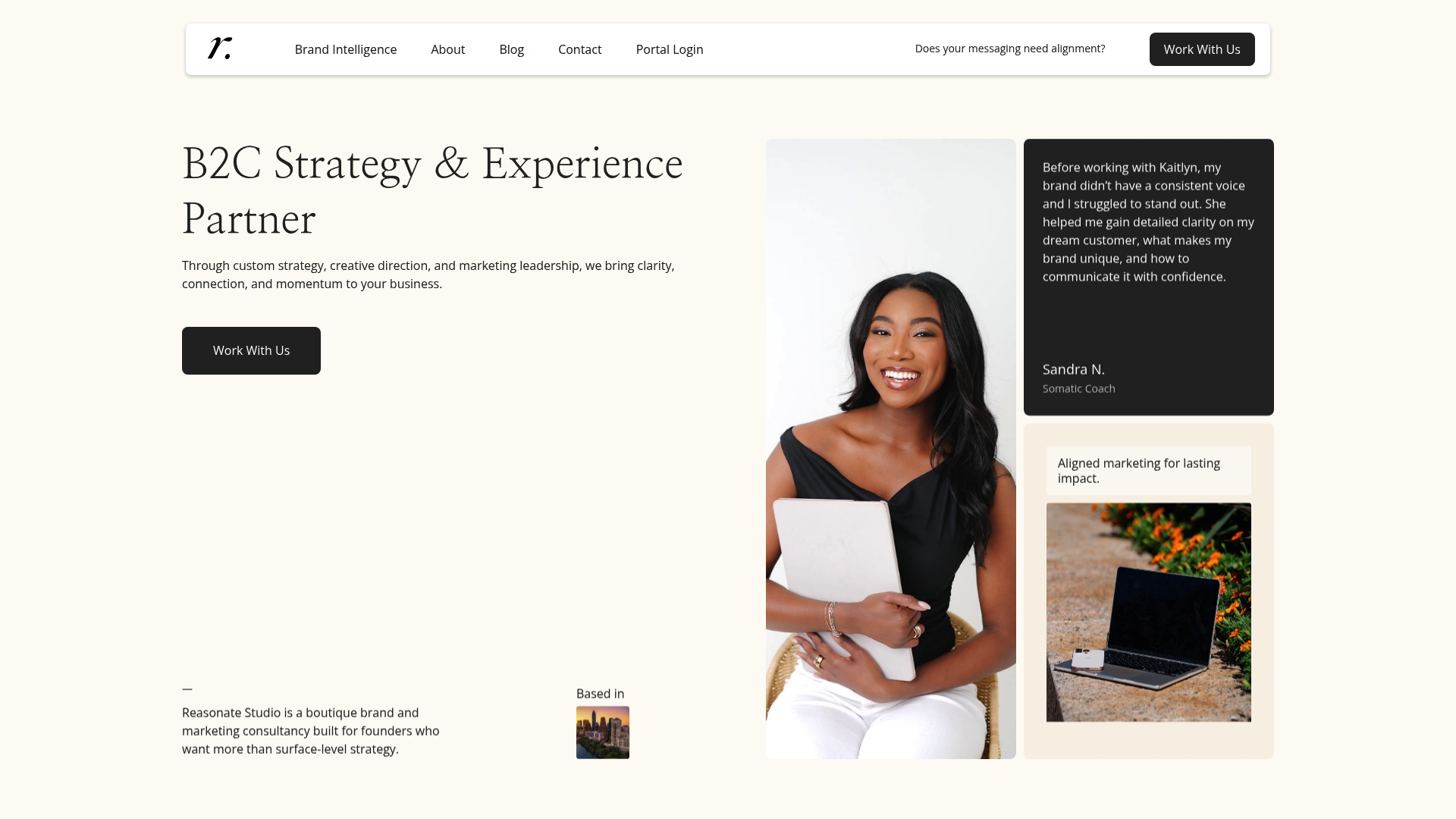
Explore how Reasonate Studio partners with you to simplify complex marketing decisions and deliver lasting impact. Visit Reasonate Studio to learn more about our unique approach. Start scaling your business with clarity and confidence today and make your marketing budget work harder for you.
Channel marketing strategies are structured approaches used by businesses to distribute products and services through multiple interconnected pathways, focusing on selecting, managing, and optimizing different communication and distribution networks that connect products with potential customers.
Common channel types include Direct-to-Consumer, retail channels, wholesale channels, digital channels, and agent/broker channels. Each type has its unique advantages in reaching different customer segments.
Channel marketing drives growth by expanding market reach, reducing customer acquisition costs, enhancing brand visibility, increasing targeting flexibility, and improving the scalability of marketing efforts through diverse distribution networks.
Key elements include market coverage, cost efficiency, alignment with customer preferences, brand consistency, and scalability. A successful channel mix requires continuous analysis and adaptation to changing market conditions.