September 22, 2026
Why Update Brand Messaging: Essential Guide for Growth


Comprehensive guide on why brand equity matters, its benefits, building strategies, business impact, and common pitfalls to avoid.

Most american consumers do not buy products just because of features or price. Research shows that brands with strong equity can command up to 20 percent higher prices compared to generic competitors. This hidden value is what sets top brands apart in crowded markets and helps businesses earn enduring loyalty. Learning how brand equity works gives you the edge to create products people trust, remember, and actively recommend to friends.
Brand equity represents the intangible value a brand generates beyond its physical product or service. Think of it as the secret sauce that transforms a simple commodity into something customers actively seek out and emotionally connect with. At its core, brand equity is the total perceived worth of a brand in the marketplace, shaped by consumer experiences, perceptions, and emotional associations.
Understanding brand equity requires looking beyond traditional metrics. Researchers like David Aaker define it as a collection of assets and liabilities that add or subtract value from a product or service. These assets might include brand awareness, customer loyalty, perceived quality, and strong brand associations. When entrepreneurs build robust brand equity, they create a powerful competitive advantage that goes far deeper than pricing or features.
The importance of brand equity becomes crystal clear when you examine consumer behavior. Brands with high equity can command premium pricing, enjoy stronger customer retention, and experience more forgiving consumer attitudes during potential missteps. By exploring our guide on brand marketing, you can dive deeper into strategies that build lasting brand value. Ultimately, brand equity transforms businesses from mere service providers into trusted partners customers genuinely want to support.
Key components of brand equity typically include:
Building brand equity isn’t an overnight process. It requires consistent messaging, delivering exceptional experiences, and creating meaningful connections that resonate beyond transactional interactions. Smart entrepreneurs recognize that investing in brand equity isn’t an expense—it’s a strategic asset that compounds in value over time.
Building strong brand equity transforms a business from a commodity provider into a strategic powerhouse that commands attention, loyalty, and premium positioning in the marketplace. Research consistently demonstrates that brands with robust equity enjoy significant competitive advantages that extend far beyond simple product features or pricing strategies.
The financial implications of strong brand equity are profound. Brands with high perceived value can command premium pricing, experiencing less price sensitivity from loyal customers. This translates into higher profit margins and more stable revenue streams. Consumer research reveals that customers are often willing to pay substantially more for brands they trust and emotionally connect with. Learn more about strategic branding advantages to understand how these emotional connections drive tangible business outcomes.
Consumer behavior research highlights several critical benefits of strong brand equity:
Beyond financial metrics, strong brand equity provides psychological advantages that create sustainable competitive differentiation. Brands with powerful equity become more than products—they transform into trusted partners that consumers actively seek out. This emotional connection reduces customer acquisition costs, increases word-of-mouth marketing, and creates a resilient foundation for long-term business growth.
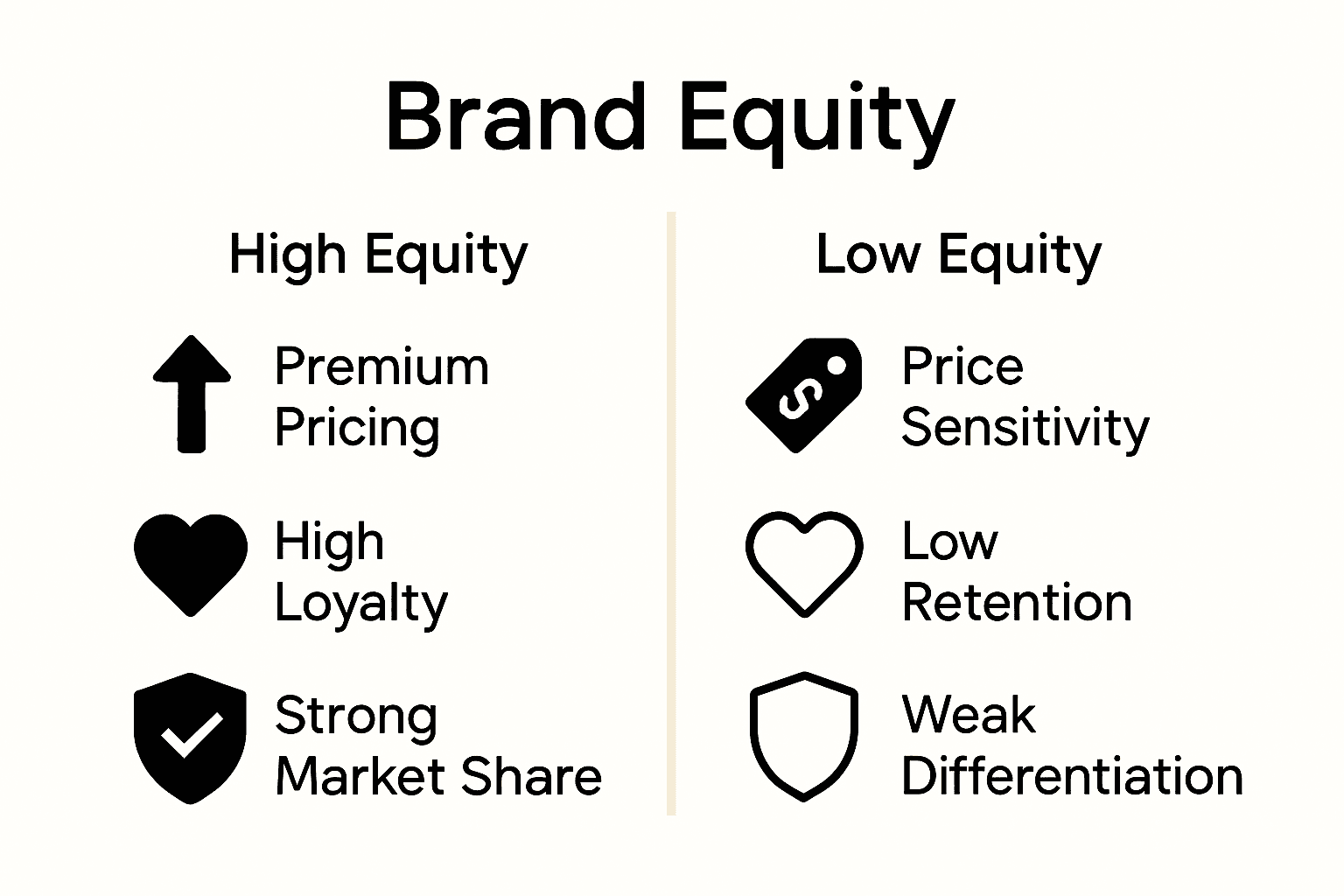 Smart entrepreneurs recognize that investing in brand equity isn’t an expense, but a strategic asset that compounds in value and reputation over time.
Brand equity is not just a marketing concept—it’s a powerful strategic lever that directly influences a company’s growth trajectory. Business growth through brand equity happens by transforming intangible perceptions into tangible financial outcomes. Research reveals that companies with strong brand equity can unlock multiple growth channels simultaneously, creating a compounding effect that goes far beyond traditional revenue strategies.
Strategic business expansion becomes dramatically more accessible when brand equity is robust. Companies with high brand equity experience reduced customer acquisition costs, increased customer lifetime value, and greater pricing flexibility. Explore why investing in branding matters to understand how strategic brand positioning translates into measurable business expansion. Advanced research demonstrates that brands with strong equity can more easily enter new markets, launch additional product lines, and attract strategic partnerships with less resistance.
Key mechanisms of brand equity driving business growth include:
Beyond financial metrics, brand equity provides strategic advantages that compound over time. Companies with powerful brand equity become more than just businesses—they transform into cultural institutions that consumers trust, recommend, and actively support. This deeper connection allows entrepreneurs to navigate market fluctuations more effectively, creating resilient growth models that aren’t solely dependent on product features or pricing strategies. Smart business leaders recognize brand equity as a long-term investment that generates exponential returns through consistent, strategic brand development.
Brand equity development is a strategic journey that requires intentional, multifaceted approaches. Successful entrepreneurs understand that building brand equity isn’t about quick marketing tactics, but creating a comprehensive ecosystem of trust, consistency, and meaningful connections with their target audience. The most effective strategies transcend traditional marketing, focusing on creating genuine value and emotional resonance.
Core to building brand equity is developing a consistent brand narrative that speaks directly to your audience’s aspirations and challenges. This means aligning every touchpoint—from visual design to customer communication—with a unified strategic vision. Learn more about crafting an effective brand strategy to understand how strategic positioning transforms perception. Successful brands invest in understanding their audience’s deeper psychological needs, creating messaging that goes beyond transactional interactions and builds meaningful relationships.
Key strategies for building brand equity include:
Advanced brand equity building requires a holistic approach that integrates strategic storytelling, exceptional service, and a genuine commitment to delivering value. Entrepreneurs who view brand equity as a long-term investment rather than a short-term marketing expense will create resilient brands that can weather market challenges and build deep, lasting connections with their audience. The most powerful brands aren’t just selling products—they’re creating movements, inspiring communities, and becoming integral parts of their customers’ identities.
Brand equity destruction often happens through subtle missteps that entrepreneurs overlook. Many businesses unintentionally erode their brand value by making reactive decisions, inconsistent messaging, or failing to understand their core audience’s evolving expectations. These seemingly minor mistakes can compound over time, transforming promising brand potential into a fragmented, unreliable market perception.
One of the most critical errors is brand inconsistency across different communication channels. Entrepreneurs frequently make the mistake of treating each marketing platform as an isolated environment, creating disjointed narratives that confuse potential customers. Discover strategies to maintain brand consistency to understand how unified messaging builds trust and recognition. Successful brands recognize that every interaction—whether on social media, website, or customer service—must reflect a cohesive brand identity that reinforces core values and promises.
Common brand equity pitfalls include:
Mitigating these risks requires a proactive, strategic approach to brand management. Smart entrepreneurs treat their brand as a living ecosystem that requires continuous nurturing, monitoring, and strategic refinement. By developing a clear brand strategy, staying true to core values, and remaining responsive to customer insights, businesses can transform potential pitfalls into opportunities for deeper connection and sustained growth.
 The most resilient brands aren’t perfect—they’re transparent, adaptable, and genuinely committed to their audience’s evolving needs.
The journey to strong brand equity is about more than just visibility or quick marketing wins. This article highlights the critical challenges many entrepreneurs face like inconsistent messaging, lack of emotional connection, and unclear brand narratives. If you are aiming to transform your brand into a trusted powerhouse with loyal customers willing to pay premium prices you need a proven system that aligns your brand’s core values with clear strategies. Key ideas such as maintaining consistency, delivering exceptional experiences, and creating meaningful emotional connections are exactly what build sustainable competitive advantages.
At Reasonate Studio, we understand that building brand equity is not a side task but the foundation for long-term growth. Our proprietary The Aligned Impact Model™ guides you through uncovering your brand’s true essence then amplifying it with strategic clarity and intentional design. Entrepreneurs working with us gain confidence by balancing DIY, DWY, and DFY support tailored to their unique goals. Ready to move beyond surface-level campaigns and invest in strategic branding that creates lasting impact? Visit Reasonate Studio today and start building the brand equity that will carry your business forward.
Explore more insights on crafting an effective brand strategy or why investing in branding matters to deepen your understanding and fast track your success.
Brand equity refers to the intangible value a brand has in the marketplace, shaped by consumer perceptions, experiences, and emotional connections. It signifies the total perceived worth of a brand beyond the product or service itself.
Building brand equity is crucial because it enhances customer loyalty, allows premium pricing, increases market share, and creates psychological advantages that differentiate a brand in competitive environments.
The key components of brand equity include brand awareness, perceived quality, brand loyalty, strong brand associations, and an emotional connection with consumers.
A company can build brand equity by creating a compelling brand story, maintaining consistent communication, delivering exceptional customer experiences, and demonstrating a genuine commitment to customer values.